Candy Rainbow Handwritten Font for Crafters & Sellers
If you’ve ever spent hours tweaking letter spacing on a candle label only to find it looks stiff or generic—or if your wedding invitation suite feels like it’s missing that warm, personal spark—you know how much a single font can shape perception. That’s why Candy Rainbow has become my go-to handwritten font for physical and digital product creation. It’s not just pretty; it’s purpose-built for makers who need beauty *and* function—especially when every detail reflects on your brand.
A Font That Feels Like a Hand-Drawn Smile
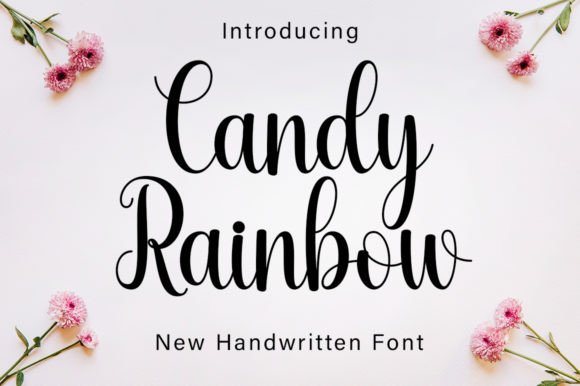
Candy Rainbow is a joyful, flowing script with soft pressure variation, gentle bounce, and subtle texture—like ink gently pressed onto handmade paper. Its letters have personality without sacrificing clarity: rounded terminals, open counters, and consistent x-height make it highly legible even at small sizes. Unlike some ornate scripts that vanish in cut lines or blur on matte labels, Candy Rainbow holds its charm whether printed at 8pt on a tea bag tag or scaled to 36 inches for a farmhouse welcome sign.
Where Candy Rainbow Shines in Real Craft Projects
I use Candy Rainbow across three core areas: packaging, stationery, and decor—and each time, it elevates perceived quality before a customer even reads the words.
- Product labels & tags: On soy wax candles, ceramic mugs, or organic skincare jars, Candy Rainbow adds artisanal warmth. I pair it with a clean sans serif (like Montserrat or Inter) for ingredients or weight—Candy Rainbow handles the brand name or flavor (“Vanilla Sky” or “Honey Lavender”) while the sans handles utility.
- Wedding & event stationery: From save-the-dates to seating charts, Candy Rainbow conveys romance without looking fussy. It works beautifully for monograms, couple names (“Elena & James”), or short phrases like “Join Us” or “Love Grows Here.” For layered SVG files in Cricut Design Space or Silhouette Studio, its smooth curves cut cleanly—even at 1.5" height on acrylic place cards.
- Printable wall art & planner pages: As a Script Amp font, Candy Rainbow includes stylistic alternates and ligatures that let me swap in flourished “&” symbols or swashed capitals for titles. I use it for quote prints (“Bloom Where You’re Planted”), habit trackers (“Good Days Start Here”), and seasonal collections—especially spring and summer, where its light, airy rhythm feels natural.
Readability Matters—Especially When You’re Cutting or Printing
Here’s what I’ve learned from testing Candy Rainbow across real production workflows:
- It remains crisp down to 10–12pt on glossy sticker sheets—ideal for jar labels or boutique gift tags.
- For vinyl cutting, I avoid using the most delicate swashes below 1.25". Instead, I lean into the standard characters or select the simplified alternates included in the font file.
- On mockups (especially for Etsy listings), Candy Rainbow renders beautifully in both light and dark mode previews—its contrast holds up well over textured backgrounds or watercolor overlays.
- It’s not meant for long paragraphs—but that’s fine. As a display font, it excels where attention is earned in seconds: a mug handle phrase, a tote bag tagline, or the headline on a printable party banner.
Smart Pairings Keep Your Brand Cohesive
Script fonts shine brightest when grounded. With Candy Rainbow, I consistently pair it with one of two reliable companions:
- A friendly, neutral sans serif—like Poppins, Nunito, or Open Sans—for body text, pricing, care instructions, or contact details. This combo signals approachability and polish, especially in digital printables or social media templates.
- A soft serif—think Playfair Display or Cormorant Garamond—for vintage-inspired packaging or formal invitations. The contrast between Candy Rainbow’s fluidity and the serif’s structure creates quiet sophistication.
What makes this pairing work isn’t just aesthetics—it’s hierarchy. Candy Rainbow draws the eye first. Then the supporting font delivers information without competing.
What’s Inside the Candy Rainbow Font Files
The download includes OTF and TTF formats—fully compatible with Canva, Adobe Creative Cloud, Cricut Design Space, Silhouette Studio, and Microsoft Office. I appreciate that it supports Latin-based languages (including accented characters for Spanish, French, and German), which matters when selling internationally or designing bilingual baby shower invites. There are no extra weights—just one expressive, well-hinted style—but it comes with discretionary ligatures, contextual alternates, and swash caps that unlock versatility without complexity.
Commercial Use? Yes—But Check the License
This is critical: Candy Rainbow is a commercial font, meaning you *can* use it in products you sell—physical items like greeting cards, t-shirts, and stickers, as well as digital downloads like Canva templates, SVG bundles, and printable planners. You may also use it in client work (e.g., designing a logo for a local bakery). What you *cannot* do is redistribute the font file itself or claim it as your own design asset. Always review the included license—most Script Amp fonts grant broad commercial rights, but permissions vary by vendor. When in doubt, assume you’re covered for end-product use, not font reselling.
Why It Fits So Naturally Into My Shop Workflow
As someone who sells both physical goods and digital printables, I need fonts that transition seamlessly between worlds. Candy Rainbow does that. A phrase set in Candy Rainbow looks equally at home laser-cut onto birch wood or rendered in a PDF planner page. Its consistency builds recognition—customers begin to associate that gentle, uplifting rhythm with my brand voice. And because it avoids extreme thin strokes or overdone embellishments, it scales reliably across mediums without needing constant manual adjustments.
Whether you're printing 500 wedding programs or uploading your 10th Canva template pack, Candy Rainbow brings intentionality back to typography—not just decoration, but communication with heart.